The moon at perigee
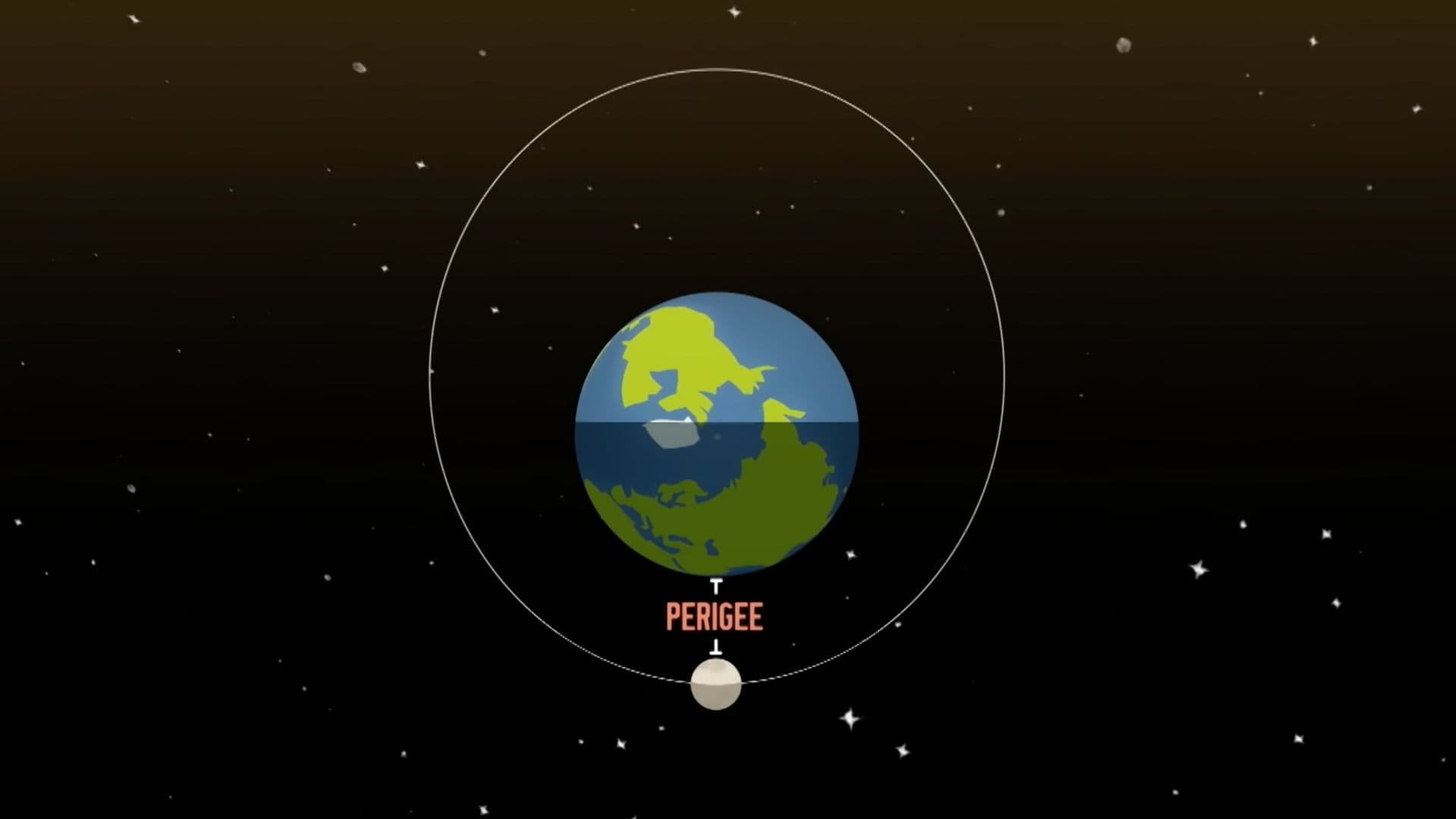
The distance of the moon from Earth always changes because the moon orbits in an elliptical orbit around Earth.
The moon reaches perigee, meaning it reaches the closest point to Earth in its elliptical orbit. Here, “perigee” comes from two words: “peri,” meaning near, and “geo,” meaning Earth.
The moon appears 5 to 8% larger than usual when it reaches perigee.
However, these closest distances vary every time the moon reaches perigee. This is because the orbit of the moon wobbles due to the gravitational perturbations of the sun.
The full moon at perigee
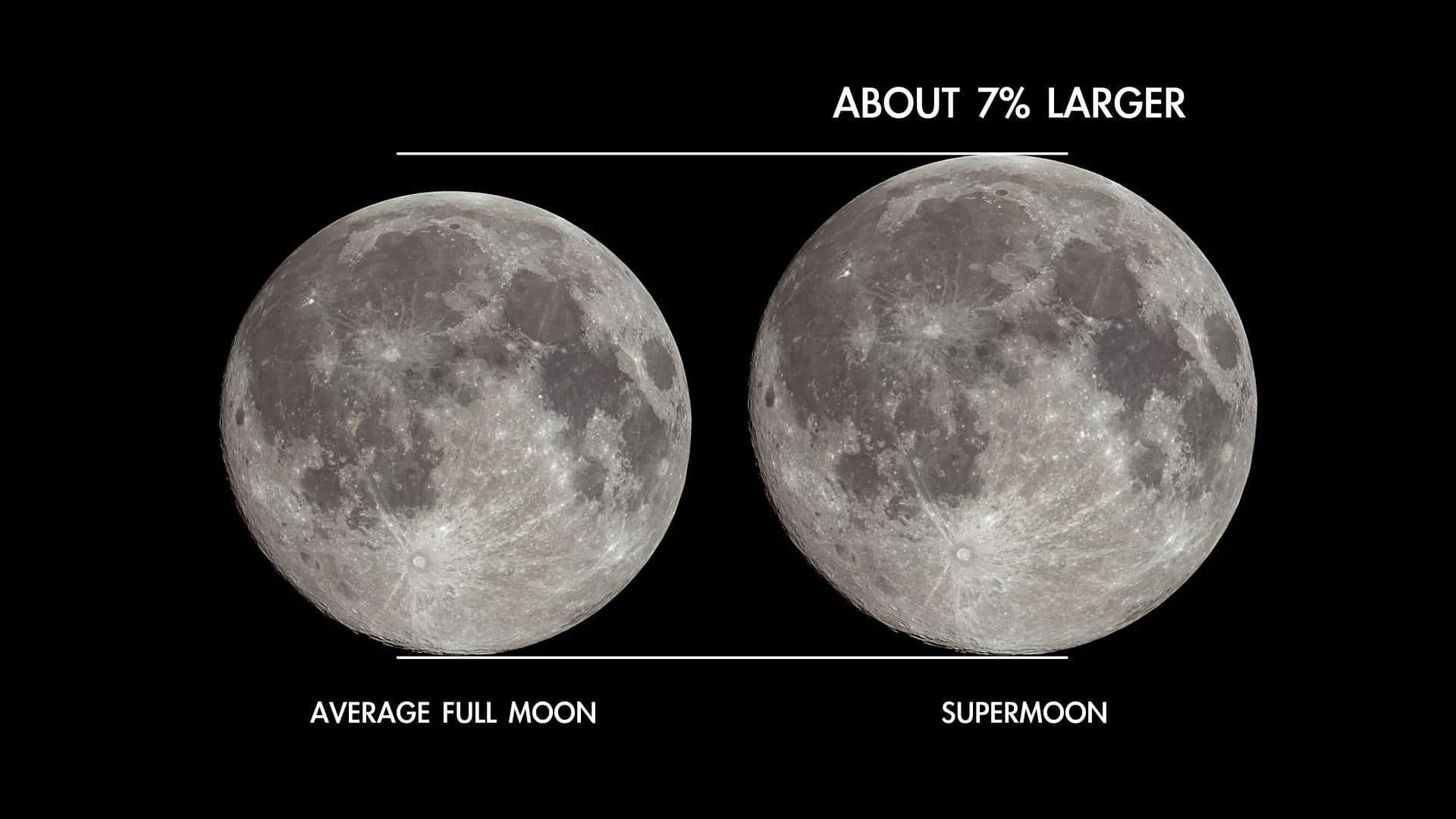
If a full moon occurs at or near perigee, then it’s called a supermoon. A supermoon is about 7% larger than a regular full moon and about 14% larger than a micromoon.
How often does the moon reach perigee?
The moon reaches perigee once every anomalistic month, or 27.555 days. The moon takes 27.555 days to complete one orbit around Earth with respect to the perigee. This is called an anomalistic month.
Now, the moon takes 27.322 days to complete one orbit around Earth with respect to the background stars. This is called a sidereal month. So an anomalistic month is slightly longer than a sidereal month.
When will the next lunar perigee occur?
The moon will reach its next perigee—its closest point to Earth—on October 1, 2026, at 20:41 UTC (4:41 p.m. EDT), when it will be 369,338 km from Earth.
Lunar perigees in 2026
Here are the dates, times, and distances for all lunar perigees in 2026:
| Date | Time (UTC) | Distance (km) | Angular diameter (arcmin) |
|---|---|---|---|
| January 01 | 21:43 | 360348 | 33.16 |
| January 29 | 21:53 | 365878 | 32.66 |
| February 24 | 23:18 | 370132 | 32.29 |
| March 22 | 11:40 | 366858 | 32.57 |
| April 19 | 06:57 | 361631 | 33.04 |
| May 17 | 13:48 | 358074 | 33.37 |
| June 14 | 23:18 | 357196 | 33.46 |
| July 13 | 07:50 | 359111 | 33.28 |
| August 10 | 11:18 | 363288 | 32.89 |
| September 06 | 20:26 | 368255 | 32.45 |
| October 01 | 20:41 | 369338 | 32.36 |
| October 28 | 18:01 | 364411 | 32.79 |
| November 25 | 20:58 | 359348 | 33.25 |
| December 24 | 08:30 | 356650 | 33.51 |
Related article: Lunar apogees in 2026: When do they occur?
Please bookmark Spaceandtelescope.com or follow us on Facebook and Twitter to get latest space news, upcoming skywatching events and astronomy-related content.


