Lunar occultation of Jupiter in November 2026
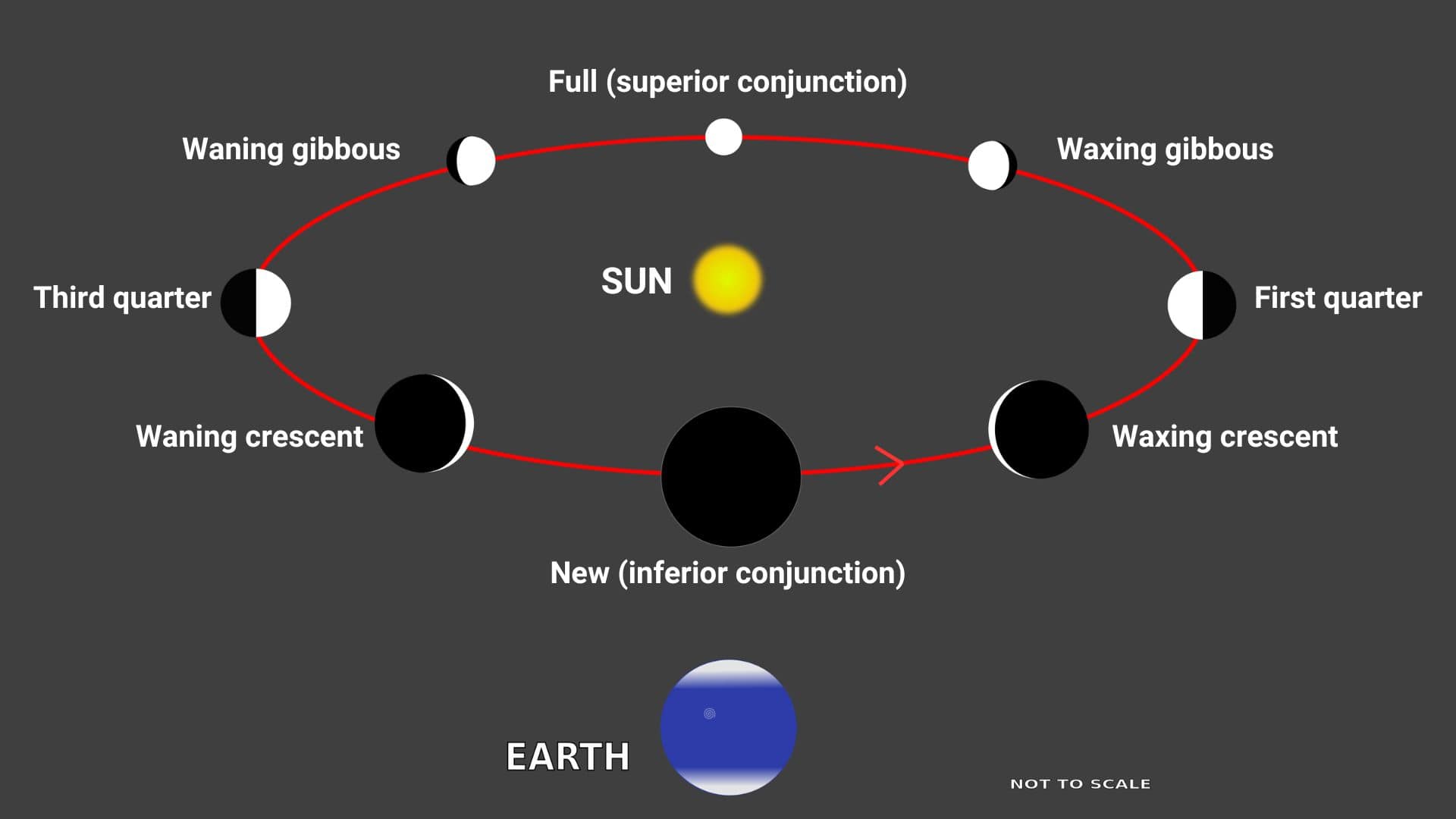
When it occurs: A lunar occultation of Jupiter will occur on November 30, 2026, when the 60% illuminated waning gibbous moon passes directly in front of the planet. As a result, Jupiter will disappear behind the bright lunar limb and reappear at the dark lunar limb about an hour later.
This is the fourth of eight lunar occultations of Jupiter that will occur in nearly consecutive months through May 12, 2027.
Visibility: The occultation will be visible in the early morning from southern Chile, southern Argentina, and Falkland Islands.
For observers outside the occultation path, a close conjunction of the moon and Jupiter will be visible on the morning of November 30, 2026.

The exact timing of the occultation depends on your location. Here are the disappearance and reappearance times for selected cities. All times are local.
| City | Disappearance | Reappearance |
|---|---|---|
| Concepción (Chile) | 4:59 a.m. | 5:34 a.m. |
| Puerto Montt (Chile) | 5:01 a.m. | 5:48 a.m. |
| Punta Arenas (Chile) | 5:14 a.m. | 6:10 a.m. |
| Comodoro Rivadavia (Argentina) | 5:15 a.m. | 6:00 a.m. |
| Stanley (Falkland Islands) | 5:38 a.m. | 6:11 a.m. |
How to see: For observers in much of Chile and Argentina, the occultation will be easily visible to the naked eye because it occurs at dawn. It will be easy to spot Jupiter before and after the occultation, as it shines at magnitude –2.1, brighter than all the stars.

You can use a pair of binoculars or a telescope to closely monitor the event. Through a telescope, you will see Jupiter’s moon Callisto disappear behind the bright lunar limb first, followed by Io, Jupiter’s main body, Europa and finally Ganymede.
For viewers in Concepción, the lunar limb will touch Callisto at 4:37 a.m. local time, Io at 4:57 a.m., Jupiter’s main body at 4:59 a.m., Europa at 5:10 a.m., and Ganymede at 5:12 a.m. The lunar limb will take about 3 minutes and 10 seconds to completely cover Jupiter’s main body.

For observers in Falkland Islands, the occultation will be challenging to observe with the naked eye because it occurs in broad daylight.
During the occultation, the moon and Jupiter will lie about 101° west of the sun, so you should be extra cautious when pointing your optics toward them. Never point your optics toward the sun unless you are using a proper solar filter. Looking at or near the sun without a proper solar filter can cause permanent eye damage.
Lunar occultations of Jupiter in 2026–2027
Here are the dates of lunar occultations of Jupiter in 2026–2027:
| Date of occultation | Visibility |
|---|---|
| September 8, 2026 | Eastern Russia, Canada, most of U.S., the Caribbean, and Greenland |
| October 6, 2026 | Parts of North America, the Caribbean, and Africa |
| November 2, 2026 | Parts of southeastern Asia and Australia |
| November 30, 2026 | Southern South America |
| February 20, 2027 | Parts of the South Pacific Ocean |
| March 19, 2027 | Much of Australia and New Zealand |
| April 15, 2027 | Much of Southern Africa and Madagascar |
| May 12, 2027 | Parts of the South Pacific Ocean |
Please bookmark Spaceandtelescope.com or follow us on Facebook and Twitter to get latest space news, upcoming skywatching events and astronomy-related content.